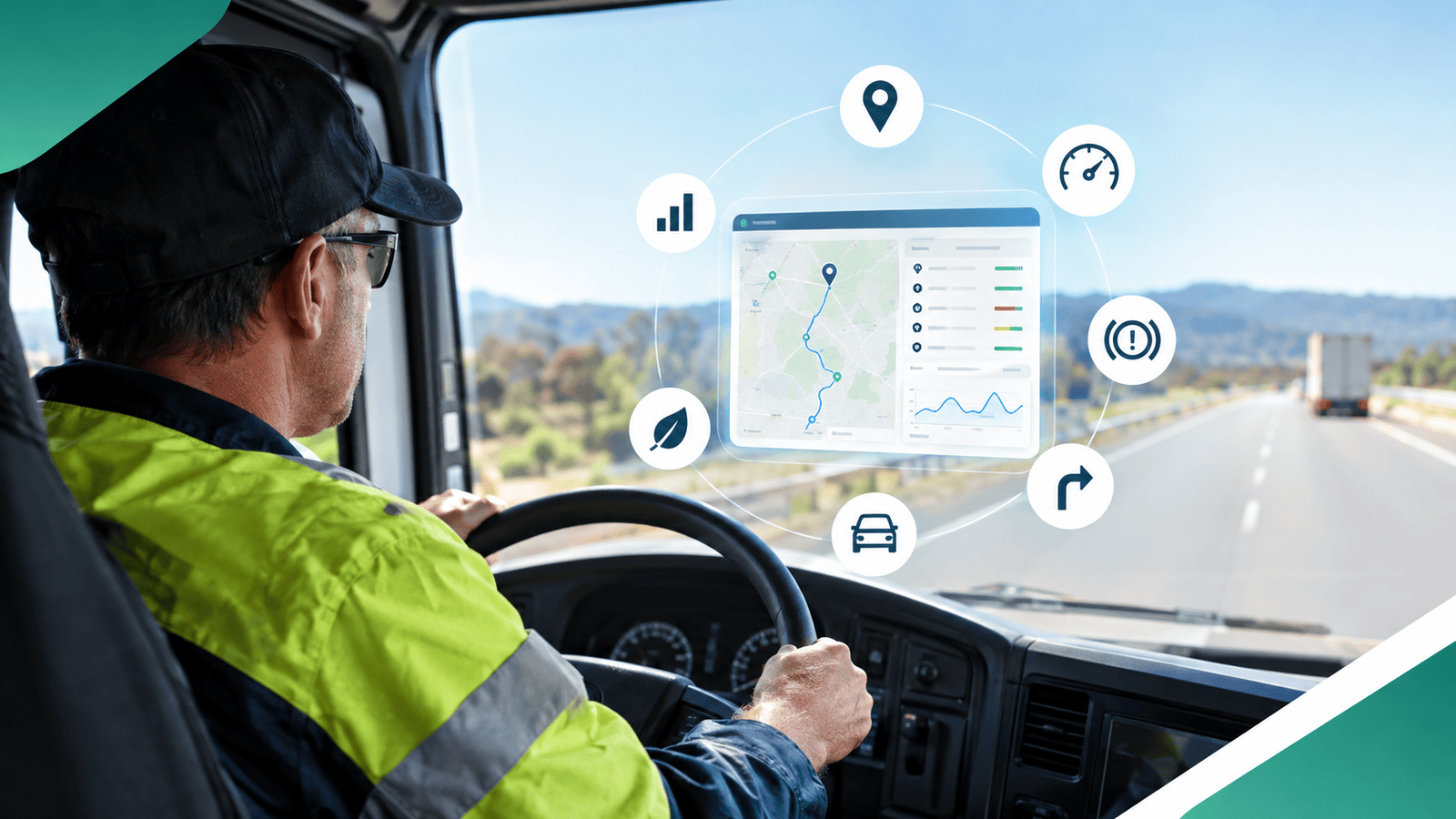
Managing a fleet is about much more than knowing where your vehicles are. Modern fleet operators need visibility into how vehicles are being driven, where operational risks are occurring, and how data can be used to improve safety, efficiency and accountability.
Driver behaviour monitoring is an important part of this evolution.
By combining GPS tracking, telematics, vehicle data and driver-performance reporting, businesses can move from simply reacting to incidents to identifying patterns and taking proactive action.
For Australian businesses operating cars, vans, trucks, buses, plant and other connected vehicles, driver behaviour monitoring can provide valuable insight into fleet operations while supporting broader workplace and road-safety objectives.
What Is Driver Behaviour Monitoring?
Driver behaviour monitoring uses telematics and vehicle-tracking technology to collect information about how a vehicle is being operated.
Depending on the system and vehicle, this can include:
- Vehicle location
- Vehicle speed
- Speed compared with posted speed limits
- Harsh acceleration
- Harsh braking
- Harsh cornering
- Excessive idling
- Rapid changes in vehicle movement
- Route deviations
- Driving-time patterns
- Vehicle utilisation
- Engine and vehicle diagnostic information
- Selected safety or fatigue events
The information can then be presented through dashboards, alerts and reports, allowing fleet managers to identify trends and investigate specific events.
The National Heavy Vehicle Regulator (NHVR) recognises telematics as an important technology for improving both transport efficiency and safety. Its guidance identifies GPS tracking, route planning, driver fatigue and distraction technologies, and vehicle monitoring as examples of technologies that can help operators manage risk.
Why Driver Behaviour Matters
Driving behaviour has a direct relationship with road safety.
Australia's National Road Safety Strategy identifies speeding, distraction, fatigue and other risky road-use behaviours as significant safety concerns.
For example, the National Road Safety Strategy reports that the risk of involvement in a fatal crash doubles for every additional 5 km/h over the speed limit in a 60 km/h zone. It also identifies fatigue and distraction as important contributors to road risk.
For businesses, the implications extend beyond individual incidents.
A fleet may involve dozens or hundreds of vehicles travelling thousands of kilometres every week. Even relatively small behavioural patterns can become significant when repeated across an entire fleet.
This is where data can make a difference.
Instead of relying solely on occasional observations, complaints or incident reports, fleet managers can establish a broader picture of what is happening across their vehicles.
How Driver Behaviour Monitoring Works
A typical driver behaviour monitoring solution combines several technologies.
1. GPS Tracking
GPS provides the location and movement of vehicles.
Fleet managers can use location information to understand:
- Where vehicles are currently operating
- Historical vehicle movements
- Routes taken
- Unplanned stops
- Route deviations
- Arrival and departure times
- Vehicle utilisation
Historical location data can also provide valuable context when reviewing an incident or operational issue.
2. Telematics
Telematics connects vehicle data with a central management platform.
Depending on the vehicle and installed equipment, telematics can provide information such as speed, acceleration, braking, fuel consumption, engine conditions and other operating parameters.
The NHVR describes telematics systems as devices that collect and transmit vehicle information to a designated person through a telematics provider. These systems can provide real-time information and support trend monitoring and driver coaching.
3. Behaviour Events
A fleet-management platform can identify specific events that may warrant attention.
Harsh braking
Importantly, an individual event should not automatically be treated as proof of poor driving.
A good monitoring system provides context, allowing managers to look at patterns, locations, road conditions, vehicle data and other information before deciding whether action is appropriate.
Driver Behaviour Monitoring Should Be About Improvement — Not Just Punishment
One of the most important considerations when introducing driver monitoring is how the information is used.
The objective should be to create a safer and more informed fleet culture rather than simply collecting data to penalise drivers.
Telematics can provide information that supports driver feedback, coaching, training and improvements to operational procedures.
This creates a more constructive approach:
Monitor → Understand → Coach → Improve → Measure
For example, if a driver repeatedly generates harsh-braking events at a particular location, the problem may not necessarily be the driver.
There could be:
- A difficult intersection
- Unexpected traffic conditions
- A steep descent
- Roadworks
- Poor route planning
- A recurring hazard
- An inappropriate speed for the road conditions
Telematics can help identify these patterns.
The result is a much more informed conversation with drivers and fleet managers.
Turning Fleet Data Into Actionable Insights
Collecting data is only the first step.
The real value comes from turning that information into practical decisions.
A modern fleet-management platform can help businesses identify:
High-risk locations
If multiple drivers experience harsh braking or other events at the same location, the business can investigate whether the route itself presents a risk.
Recurring driver behaviour
A single event may not mean much. Repeated events over weeks or months can reveal a behavioural pattern.
Route optimisation opportunities
Historical GPS information can help businesses understand how vehicles are actually travelling and identify opportunities to improve route planning.
Vehicle utilisation
Understanding where vehicles are operating and how frequently they are being used can help businesses make better decisions about fleet size and deployment.
Operational inefficiencies
Unnecessary idling, excessive travel or unexpected route deviations may highlight opportunities to improve efficiency.
Incident investigation
When an incident occurs, historical telematics information can provide additional context about the vehicle's location, movement and operating conditions.
Speed Monitoring and Fleet Safety
Speed is one of the most important areas for fleet operators to monitor.
Australia's road-safety strategy identifies speed management as a critical component of the Safe System approach to road safety
.
For fleet operators, speed monitoring can therefore be more than simply identifying whether a vehicle exceeded a particular threshold.
It can help answer questions such as:
- Are speeding events isolated or recurring?
- Are particular routes generating more events?
- Are certain locations consistently problematic?
- Is a particular vehicle generating unusual behaviour?
- Has driver behaviour improved following coaching?
- Are operational schedules encouraging unnecessary time pressure?
This turns speed data into a tool for managing risk rather than simply generating reports.
Fatigue, Distraction and Driver Safety
Driver behaviour monitoring can also form part of a broader fleet safety strategy.
Fatigue can reduce alertness, reaction time, attention and decision-making ability. The National Road Safety Strategy identifies fatigue as a significant road-safety issue and notes that drivers who have slept for only four to five hours in the previous 24 hours have substantially higher crash risk than drivers who have slept seven hours or more.
Modern fleet technology can complement fatigue-management procedures by providing additional operational information.
Depending on the technology deployed, businesses may combine:
- Vehicle telematics
- Driver work and rest information
- Fatigue monitoring
- Distraction detection
- GPS data
- Driver alerts
- Incident reporting
These technologies should complement, rather than replace, appropriate fatigue-management policies and driver training.
Driver Behaviour Monitoring for Heavy Vehicles
For heavy-vehicle operators, the value of telematics extends beyond basic GPS tracking.
The NHVR identifies several applications for safety technology and telematics, including GPS and route tracking, electronic work diaries, fatigue and distraction detection, and monitoring vehicle behaviours such as rollover risk, fuel usage, tyre pressure and engine health.
This is particularly valuable where businesses need to manage complex operations involving:
- Trucks
- Trailers
- Buses
- Construction vehicles
- Service vehicles
- Long-distance transport
- Remote-area operations
- Multi-site fleets
A connected fleet can provide management teams with a much clearer picture of what is happening across their operations.
From Reactive Fleet Management to Proactive Fleet Management
Traditional fleet management often relies heavily on reacting to events.
A vehicle breaks down.
A customer complains about a late delivery.
A speeding infringement occurs.
A driver reports an incident.
A vehicle arrives later than expected.
Modern fleet technology changes the model.
Instead of waiting for something to happen, businesses can use data to identify emerging trends.
Reactive approach
Incident → Investigation → Response
Proactive approach
Data → Pattern → Insight → Action → Improvement
This shift can be particularly valuable for larger fleets where managers cannot physically observe every vehicle or driver.
What Should Businesses Look For in a Driver Monitoring Solution?
Not every fleet needs the same level of technology.
When evaluating a solution, businesses should consider:
Real-time visibility
Can fleet managers see where vehicles are and what is happening now?
Historical reporting
Can managers review previous journeys and events?
Behaviour analytics
Does the platform identify useful driving events and trends?
Alerts
Can important events trigger notifications so managers do not need to constantly monitor a dashboard?
Scalability
Can the system support a growing fleet?
Vehicle compatibility
Can the technology work across different vehicle types?
Integration
Can fleet data work alongside existing business systems and processes?
Reporting
Can managers generate reports that are useful for operations, safety reviews and management decisions?
Support
Is there a knowledgeable local team available to help with deployment, configuration and ongoing support?
The technology should fit the business — not the other way around.
Driver Behaviour Monitoring and Fleet Management With Impulse Wireless
At Impulse Wireless, we believe fleet technology should do more than put a dot on a map.
Our fleet-management solutions are designed to provide businesses with greater operational awareness through real-time and historical information across vehicles, radios and connected assets.
Our published fleet-management capabilities include vehicle tracking and route monitoring, driver behaviour monitoring and telematics, supporting businesses that need greater visibility across their mobile operations.
Our approach also connects fleet management with our broader communications and IoT capabilities.
This can allow organisations to bring together technologies such as:
- GPS vehicle tracking
- Fleet and route monitoring
- Driver behaviour data
- Telematics
- Push-to-Talk communications
- Lone-worker safety
- IoT-connected assets
- Real-time operational information
For organisations with mobile and remote workforces, bringing these technologies together can create a more connected operational environment.
Impulse Wireless has been operating in Australia since 2011 and works with organisations across industries including government, construction, logistics, transport, education and events.
Our team can help businesses assess their operational requirements and determine which combination of technologies is appropriate for their fleet.
The Future of Fleet Management Is Data-Driven
Fleet management is continuing to move beyond basic vehicle tracking.
The next generation of fleet operations is increasingly about connecting vehicles, drivers, communications and other assets so businesses can make better-informed decisions.
Driver behaviour monitoring is an important part of this transition.
When implemented correctly, it can help businesses:
- Improve visibility
- Identify potentially risky patterns
- Support driver coaching
- Investigate incidents
- Improve route awareness
- Monitor vehicle utilisation
- Support safety initiatives
- Make better operational decisions
Most importantly, the technology provides information that can help businesses move from assumptions to evidence.